
Nathan D. Grubaugh, Ph.D., M.S.
Professor
Yale School of Public Health
Department of Epidemiology and Microbial Diseases
Department of Epidemiology and Microbial Diseases
YSPH Global Health Concentration
Yale Institute of Global Health
Yale Institute of Global Health
-
Email: [email protected]
-
Laboratories of Epidemiology and Public Health 60 College St. Suite 608; New Haven, CT 06510
-
Public Health Modeling Unit 350 George St. New Haven, CT 06510
- BS in Biomedical Sciences – Western Michigan State University
- Postbac Fellowship in Systems Biology – National Institutes of Health (Ian Freser)
- MS in Biotechnology – Johns Hopkins University
- Graduate Fellowship in Arbovirology – ISAMRIID (John Lee, Mike Turell)
- PhD in Microbiology – Colorado State University (Greg Ebel)
- Postdoc Fellowship in Virus Genomics – The Scripps Research Institute (Kristian Andersen)
I joined the faculty at Yale School of Public Health in 2018. Before going to graduate school, I spent ~7 years working in the biotech industry doing toxicology studies, monitoring food production lines for pathogens, and developing early phase vaccine candidates. I earned my MS in biotechnology from Johns Hopkins University (2011) while conducting research at the NIH and the US Army Research Institute of Infectious Diseases (focus on mosquito-borne virus surveillance). I earned my PhD in microbiology from Colorado State University in 2016 (focus on West Nile virus evolution), and went on to be a postdoctoral fellow at The Scripps Research Institute to study the 2015-2017 Zika virus epidemic.
Building on these experiences, our lab uses genomics to determine the emergence risk and to track the spread of mosquito-borne viruses, like Zika, chikungunya, dengue, and West Nile.
Specifically, we:
1) sequence viruses during outbreaks for epidemiological investigations (genomic epidemiology)
2) determine the disease phenotype and transmission fitness of novel virus mutations that occur during outbreaks (functional genomics), and 3) map the evolutionary pathways that a virus may take to adapt to a new environment (experimental evolution).
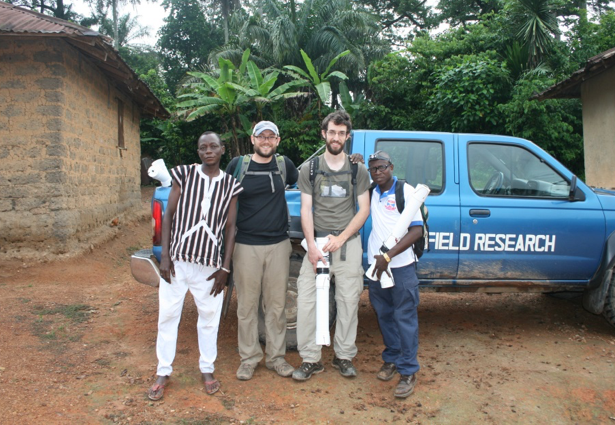
To do these studies, which include expertise in field work, computational biology, and laboratory experimentation, we are building a diverse team and we collaborate with many groups from around the world. Our goals are to integrate genomic data into surveillance and response programs to better prevent and control future mosquito-borne virus outbreaks.
I also have a fondness for beer 😉
Building on these experiences, our lab uses genomics to determine the emergence risk and to track the spread of mosquito-borne viruses, like Zika, chikungunya, dengue, and West Nile.
Specifically, we:
1) sequence viruses during outbreaks for epidemiological investigations (genomic epidemiology)
2) determine the disease phenotype and transmission fitness of novel virus mutations that occur during outbreaks (functional genomics), and 3) map the evolutionary pathways that a virus may take to adapt to a new environment (experimental evolution).
To do these studies, which include expertise in field work, computational biology, and laboratory experimentation, we are building a diverse team and we collaborate with many groups from around the world. Our goals are to integrate genomic data into surveillance and response programs to better prevent and control future mosquito-borne virus outbreaks.
I also have a fondness for beer 😉